






How VOO dividends work
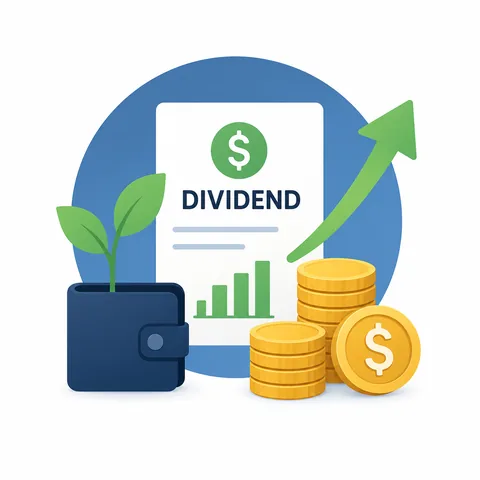
VOO collects dividends from all ~500 companies in the S&P 500 (Apple, Microsoft, NVIDIA, JPMorgan, Johnson & Johnson, and hundreds of others). As those companies pay their own quarterly dividends throughout the year, the cash flows into VOO's portfolio. Vanguard then aggregates these payments and distributes them to VOO shareholders four times per year.
Unlike SPY, which holds dividends as uninvested cash until distribution, VOO reinvests received dividends into the portfolio immediately. This reduces "cash drag" and slightly improves total returns between distribution dates.
The dividend amount varies each quarter because different S&P 500 companies pay on different schedules. December quarters tend to be the largest (many companies pay special year-end dividends), while March quarters tend to be the smallest. For a full picture of what companies drive these payments, see our VOO holdings breakdown.
Understanding VOO's yield
VOO's current trailing 12-month yield of approximately 1.07% is lower than its historical average. This isn't because VOO is paying less in absolute dollars. The annual dividend per share has grown from $3.93 in 2015 to $7.43 over the last four quarters. The yield looks low because VOO's share price has risen even faster than its dividends, driven by the dominance of high-growth, low-dividend technology stocks like NVIDIA, Amazon, and Tesla.
For investors seeking higher dividend income, a fund like SCHD (Schwab U.S. Dividend Equity ETF) yields approximately 3.5% but sacrifices total return potential. VOO is fundamentally a total return fund where dividends are a component of performance, not the primary draw.
If you're building a retirement portfolio focused on long-term growth rather than current income, VOO's lower yield isn't a drawback. It reflects the fund's tilt toward high-growth companies that reinvest profits rather than distributing them. Many investors pair VOO with a tax-advantaged Roth IRA where dividends compound tax-free.
Dividend reinvestment (DRIP)
Most brokerages offer automatic dividend reinvestment (DRIP) for VOO at no cost. When DRIP is enabled, each quarterly dividend payment is automatically used to purchase additional fractional shares of VOO instead of being deposited as cash.
Over long holding periods, DRIP has a meaningful compounding effect. A $10,000 investment in VOO at the end of October 2010, a month after launch, was worth about $14,040 more by October 2026 with dividends reinvested than with dividends taken as cash, because each reinvested dividend buys shares that themselves generate future dividends.
Our past performance calculator models the impact of reinvested dividends on long-term portfolio growth, and the investment calculator lets you project future growth with monthly contributions. And if you're new to investing in VOO, our step-by-step buying guide covers how to set up DRIP at major brokerages.
Frequently asked questions
How often does VOO pay dividends?
VOO pays dividends quarterly, typically in late March, June, September, and December. Payment usually arrives two to three business days after the ex-dividend date. You must own shares before the ex-dividend date to receive that quarter's distribution.
What is VOO's current dividend yield?
VOO's trailing 12-month dividend yield was about 1.07% at the end of October 2026, based on $7.43 in distributions over the last four quarters and a month-end share price of $694.81. The yield moves as both the share price and the dividend amounts change.
When is VOO's next ex-dividend date?
VOO's next ex-dividend date is expected in late December 2026, based on its usual quarterly schedule. Vanguard announces the exact date 1 to 2 weeks before the ex-date. Check investor.vanguard.com for the official announcement.
How much dividend does VOO pay per share?
VOO's most recent quarterly dividend was $1.8226 per share (ex-date Sep 28, 2026, paid Sep 30, 2026). The last four distributions total $7.43 per share. The amount varies each quarter with the dividends paid by the underlying S&P 500 companies.
Is VOO's dividend qualified for the lower tax rate?
Yes. Almost all of VOO's distributions are qualified dividends, which are taxed at the long-term capital gains rate (0%, 15%, or 20%) rather than ordinary income rates. To receive qualified status, you must hold VOO for at least 61 days around the ex-dividend date. Most buy-and-hold investors automatically qualify. See our VOO tax guide for the full breakdown.
Does Vanguard automatically reinvest VOO dividends?
Only if you enable dividend reinvestment (DRIP) on your brokerage account. Vanguard, Fidelity, Schwab, and most other brokers offer free, fractional-share reinvestment for VOO. Without DRIP, dividends land in your settlement account as cash. DRIP is usually the right default for long-term investors, since it compounds automatically without commissions.
Why did VOO's dividend yield drop recently?
Yield moves inversely with price. When VOO's share price rises faster than the trailing 12-month dividends, the yield percentage falls even though actual cash distributions are flat or higher. The dollar amount per share matters more than the yield headline. Check the $ amount paid each quarter rather than the trailing yield.
When are VOO's ex-dividend dates each year?
VOO pays four times per year, with ex-dividend dates in the last weeks of March, June, September, and December. You must own VOO before the ex-dividend date to receive that quarter's payment. Payment usually follows two to three business days later.